The Digital Advertising Shift: Why Small Businesses Should Act Now
Advertising is moving from traditional mass media toward a more measurable, targeted and technology-driven ecosystem. For small businesses, this shift creates new opportunities — but the competitive landscape is changing too.
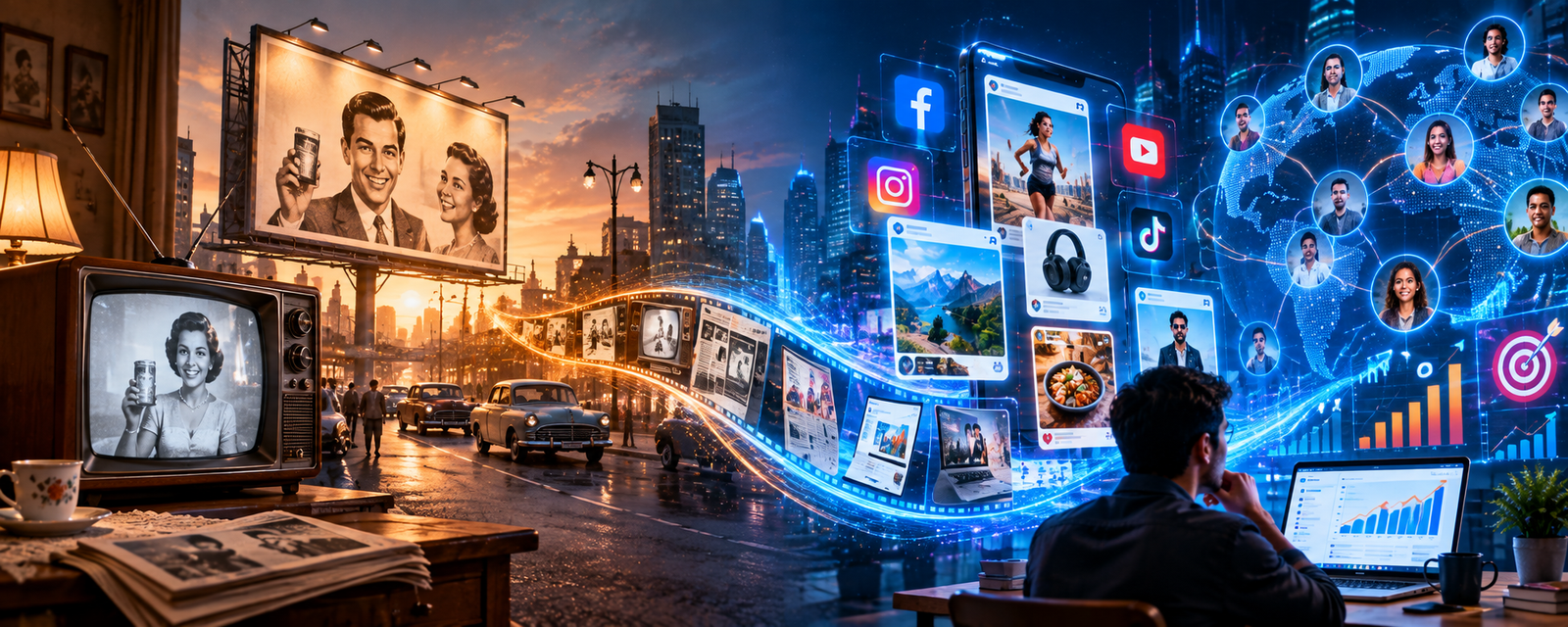
Advertising has never been static. The platforms change, consumer behaviour changes, technology changes — and eventually, the way businesses compete for attention changes with them.
For decades, traditional advertising channels such as television, newspapers, radio and outdoor billboards played a major role in reaching large audiences. These channels could create enormous visibility, but they also required significant budgets and access to limited media inventory.
Today, the environment is very different. Smartphones, social media, search engines, video platforms, analytics and digital advertising systems have created a new way for businesses to find and communicate with potential customers.
1. When Traditional Advertising Dominated
Before digital platforms became mainstream, a business looking for mass visibility had a relatively small number of major channels to choose from.
Television commercials, newspaper advertisements, radio spots, magazines and billboards were among the most visible ways to reach large audiences.
The advantage of these channels was scale. A television campaign or a large outdoor campaign could put a brand in front of a huge number of people.
But scale often came with a high financial barrier. Advertising decisions were frequently influenced by media buying budgets, geographic coverage, campaign duration and available inventory.
This did not mean that small businesses could never advertise. Local newspapers, radio stations, outdoor signage and community marketing could still be useful. The difference was that achieving large-scale, precisely targeted reach was generally more difficult.

2. Then the Digital Shift Began
The arrival of the internet, smartphones and social platforms changed the advertising equation.
Instead of depending only on a large physical media placement, businesses could start reaching people through search engines, social networks, websites, video platforms and other digital channels.
More importantly, digital advertising introduced capabilities that traditional advertising could not offer in the same way: audience targeting, campaign measurement, conversion tracking, creative testing and ongoing optimisation.
3. What Changed for Small Businesses?
One of the biggest changes is that advertising can now be much more accessible to businesses that do not have the budgets of national brands.
A local business can create a digital campaign around a specific location, service, customer profile or business objective rather than simply paying for broad exposure.
For example, a business can potentially build campaigns around people searching for a particular service, watching related content or engaging with specific types of online content.
The important point is not that digital advertising is always cheap. It is that digital platforms can provide significantly more control over targeting, testing and measurement.
4. From Reaching Everyone to Reaching the Right People
Traditional advertising often focused heavily on reaching a large audience.
Digital advertising introduced a different philosophy: reach the people who are more relevant to the business.
This can change the way a small business thinks about marketing. Instead of asking only, "How many people saw my advertisement?", the business can start asking:
- Who saw the advertisement?
- Which audience responded?
- Which creative performed better?
- Which campaign generated useful actions?
- What should be changed in the next campaign?
That feedback loop is one of the most powerful aspects of performance-oriented digital marketing.

5. Will Digital Advertising Always Be This Accessible?
This is where the conversation becomes more interesting.
Digital advertising may be more accessible than many traditional mass-media options, but accessibility does not mean unlimited cheap reach.
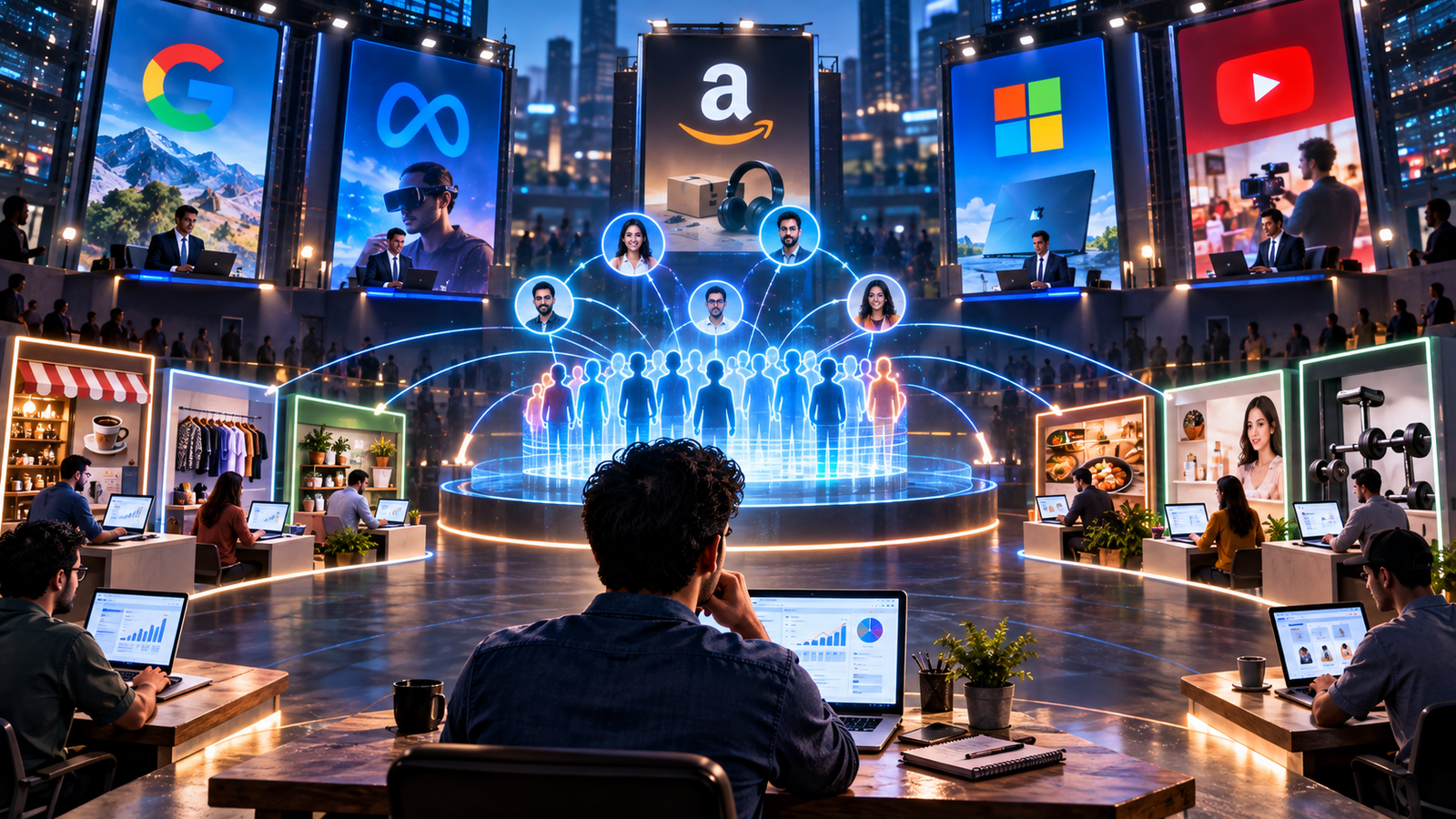
Digital platforms are becoming increasingly important to large brands as well. As more advertisers compete for valuable audiences, high-intent searches, attention and conversions, competition can naturally become stronger in certain categories.
That does not mean advertising costs will automatically increase everywhere or for every business. Costs can vary significantly depending on the industry, audience, location, season, campaign objective, creative quality and platform.
But one thing is reasonable to expect: the digital advertising ecosystem is becoming more competitive.
6. Big Brands Are Moving Further Into Digital
Large companies already have strong marketing capabilities, but their digital investments are becoming an increasingly important part of the overall advertising landscape.
As more established brands compete for digital attention, smaller businesses cannot assume that the digital space will remain an easy and uncrowded environment.
The advantage may increasingly go to businesses that understand their customers, test their campaigns, analyse their data and improve their marketing consistently.
7. We Are Living Through a Shifting Time
The advertising industry is not switching from traditional to digital overnight. Both ecosystems continue to exist.
What we are seeing is a gradual shift in where audiences spend their attention and where businesses allocate their advertising budgets.
8. This Shift Is Also Creating Career Opportunities
The digital advertising shift is not only a business story. It is also creating demand for people who understand how digital systems work.
Businesses increasingly need people who can work with areas such as:
- Performance Marketing
- Google Ads and paid search
- Social Media Marketing
- SEO and Content Marketing
- Analytics and conversion tracking
- GA4 and Google Tag Manager
- Campaign reporting and optimisation
- WordPress and landing-page development
- Creative testing and audience strategy
- AI-assisted marketing workflows
The opportunity is not simply to learn how to operate an advertising platform. The more valuable skill is understanding the complete journey — from audience and creative to landing page, tracking, conversion and optimisation.
9. Should Small Businesses Go Digital Now?
In my view, the answer is yes — but not because every business should immediately spend a large amount of money on ads.
The first step should be understanding the digital ecosystem and building the foundations properly.
A small business can start by creating a professional website, defining its target audience, understanding its customer journey, setting up analytics and tracking, producing useful content and then testing paid campaigns with controlled budgets.
The objective should be learning what works, not simply spending money because competitors are running advertisements.
10. The Real Advantage May Be Adaptability
The biggest advantage for a small business may not be having the largest advertising budget.
It may be the ability to learn quickly, test ideas, understand customers and adapt before the market becomes even more competitive.
Digital marketing gives smaller businesses tools that were once much harder to access. But tools alone do not create results. Strategy, execution, measurement and continuous improvement still matter.
That is why this period can be viewed as a shifting time. Businesses that start understanding digital marketing today may build valuable capabilities before the ecosystem becomes even more crowded.
Conclusion: The Opportunity Is Real, But So Is the Competition
Advertising has moved into a more connected, measurable and technology-driven environment.
Small businesses now have access to digital tools that can help them reach specific audiences, test campaigns and measure results in ways that were difficult to achieve through traditional mass media alone.
At the same time, large brands are also investing heavily in digital channels. That means the opportunity is real, but the competitive environment is evolving.
So the message is not that every business must advertise immediately or that digital advertising will definitely become expensive.
The message is simpler: learn the digital ecosystem, build the right foundation, experiment intelligently and stay adaptable.
Want to Build Your Digital Presence?
Whether you are exploring digital advertising, improving a website or building a performance-focused online presence, start with the right foundation and keep improving from there.